Let’s see what is the difference between Handler, HandlerFunc, Handle, HandleFunc in the net/http package in go and how to use them
Handler
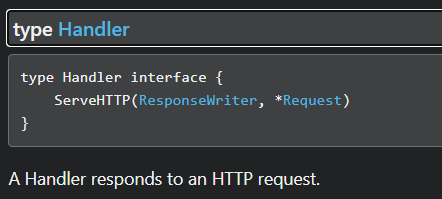
type:
interface
as you can see Handler is an interface. this is the core contract for any object that serve or respond to an HTTP request in Go
if a particular type wants to act as an HTTP handler, it must implement the ServeHTTP method
Usage
package main

import (
	"fmt"
	"log"
	"net/http"
)

type myHandler struct {
	Text string
}

func (h *myHandler) ServeHTTP(w http.ResponseWriter, r *http.Request) {
	fmt.Fprintln(w, h.Text)
}

func main() {
	mux := http.NewServeMux()
	mycustomHandler := &myHandler{Text: "this is your custom handler"}
	mux.Handle("/", mycustomHandler)
	fmt.Println("Starting server on :8081")
	log.Fatal(http.ListenAndServe(":8081", mux))

}
here our custom type, myHandler can be passed to Handle in place of a handler because myHandler satisfies the interface Handler by implementing ServeHTTP
but we haven’t seen what Handle does, right? hold that thought we are getting there, it will all make sense in some time
HandlerFunc
now if you are coming from a MVC background (like me, for ex: node, express for backend where you have controllers.js, routes.js etc) you can consider the HandlerFunc as parallel to controller functions

type:
Function
now the purpose of HandlerFunc is to act as a bridge that allows us to use ordinary Go functions (provided it has the correct signature func(ResponseWriter, *Request))
the HandlerFunc itself implements Handler (i.e.,it has its own ServeHTTP method)
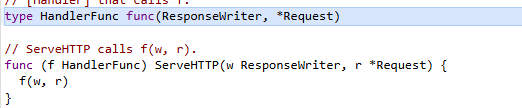
so when ServeHTTP is called on the value of the type HandlerFunc it simply calls the underlying function that HandlerFunc wraps
package main

import (
	"fmt"
	"log"
	"net/http"
)

func handlerHome(w http.ResponseWriter, r *http.Request) {
	fmt.Fprintln(w, "Welcome to the home page!")
}

func main() {
	mux := http.NewServeMux()
	mux.Handle("/", http.HandlerFunc(handlerHome))
	fmt.Println("Starting server on :8081")
	log.Fatal(http.ListenAndServe(":8081", mux))

}
Handle
type:
Function

this is a primary block,which is used to associate a specific URL pattern to a specific http.Handler
When a multiplexer receives a request whose URL path matches the pattern, it will call the ServeHTTP method of the registered handler
the second argument has to be a value that satisfies the http.Handler interface
we saw Handle’s usage above
HandleFunc
type:
Function
this is also used to register handler’s but the way to do it is a little bit different and convenient

this does the same job as http.Handle, but specifically designed to accept a regular function (with correct signature as http.HandlerFunc) directly as handler without requiring to manually convert this function into a http.HandlerFunc and pass it to http.Handle as an handler, more like a convenience wrapper
package main

import (
	"fmt"
	"log"
	"net/http"
)

func homePage(w http.ResponseWriter, r *http.Request) {
	fmt.Fprintln(w, "Welcome to the Home Page!")
}

func contactPage(w http.ResponseWriter, r *http.Request) {
	fmt.Fprintln(w, "Contact us at contact@example.com")
}

func main() {
	mux := http.NewServeMux()
	mux.HandleFunc("/", homePage)
	mux.HandleFunc("/contact", contactPage)
	fmt.Println("Starting server on :8081")
	log.Fatal(http.ListenAndServe(":8081", mux))
}
That’s the end of it, hope this helps.